
Why Timing Your Paint Job Around Other Projects Matters
A fresh coat of paint can transform a home, but painting at the wrong time in your renovation timeline can mean redoing work you just finished. Before you pick up a brush, it pays to think about every other project happening in and around your house, from plumbing repairs to outdoor upgrades. Dust, debris, water, and heavy equipment from other jobs can ruin new paint in a matter of hours. Planning your paint job around these other projects saves money, time, and frustration down the road.
Scheduling Paint Work Around Major Plumbing Repairs

Plumbing problems rarely announce themselves politely, and tackling them after you paint can undo all your hard work. If you suspect your water heater is on its last leg, it makes sense to schedule water heater repair before any interior painting begins, since leaks and standing water can warp drywall and ruin fresh paint. Water heaters typically last 8 to 12 years, so if yours is approaching that age or showing warning signs — rusty water, popping noises, or moisture pooling around the base — it’s worth having a plumber inspect it before you touch a paint roller. A failing unit can also lead to sudden flooding that soaks baseboards and lower walls, often in rooms nowhere near the actual unit, like a nearby hallway or closet. It’s also worth checking other plumbing fixtures while you’re at it, including supply lines, shutoff valves, and any visible pipe corrosion near the areas you plan to paint. Catching a slow leak behind a wall now can save you from repainting that same wall six months later. Addressing this kind of repair first protects your investment in both the plumbing and the paint.
Beyond water heaters, drainage issues deep in your plumbing system deserve attention too. Slow drains, gurgling pipes, or recurring backups often signal roots, grease buildup, or debris lodged deep in the line, and clearing them typically calls for sewer cabling to cut through the obstruction and restore proper flow. This kind of work can involve accessing pipes through walls, floors, or even exterior cleanouts, which sometimes means cutting drywall or lifting flooring to reach the problem area. Doing this messy job before painting means you won’t have to patch and repaint areas disturbed during the repair. If a plumber needs to open a wall in your hallway or bathroom, that’s drywall dust, joint compound, and sanding residue settling on surfaces you may have just finished painting. Scheduling the sewer work first lets any necessary patchwork cure fully before primer and paint go on, so you get a smooth, lasting finish instead of visible seams or uneven texture. It’s also worth asking your plumber upfront whether the job is likely to require cutting into walls or just running a cable through existing cleanouts. Minor clogs may only need a quick cabling pass with no demolition at all, while root intrusion deeper in the line can mean a more invasive fix. Knowing the scope ahead of time helps you decide how far out to push your paint schedule. Sequencing matters here just as much as the repair itself.
Coordinating Exterior Painting With Outdoor Construction

Exterior painting is especially vulnerable to the chaos of other outdoor projects. If you are planning a fence installation, it is wise to complete that work before painting your home’s exterior, since construction crews, materials, and equipment often brush against siding and trim. Wood chips, dust, and accidental scrapes can damage a new paint job before it even cures. Fence installation alone can involve post-hole digging, concrete mixing, and the delivery of lumber or vinyl panels, all of which generate dust and debris that can settle on wet or freshly cured paint. Heavy trucks and equipment maneuvering close to the house also raise the risk of ladders, materials, or tools accidentally scraping against newly painted surfaces. Even a few days of settling dust can dull a fresh finish or create a gritty texture that is difficult to fix without repainting entire sections. The same logic applies to other outdoor construction, such as deck building, patio installation, or landscaping that requires heavy machinery near the house. Concrete overspray, soil disturbance, and stray nails or screws can all compromise a paint job in ways that are costly to repair. Scheduling these projects first, and giving the dust time to settle, protects your investment in both time and materials. Waiting until the fence is finished gives your painter a clean, undisturbed surface to work with. It also allows the painter to assess the property without obstacles, ladders being blocked, or fresh paint competing with ongoing construction traffic. In many cases, contractors will even recommend a buffer of a week or two after construction wraps up, just to let dust settle and surfaces fully dry before prep work begins.
Timing also matters when it comes to protecting your landscaping investment and the hardscaping that surrounds your home. Installing landscape lighting after painting is usually the better order of operations, because running wires and digging trenches near your foundation can kick up dirt, mulch, and dust that splatters onto freshly painted walls. Exterior paint typically needs 30 days to fully cure, so any trenching or fixture installation done too soon risks marring a surface that hasn’t fully hardened. The same logic applies to other outdoor construction projects like patios, decks, fences, and retaining walls. Concrete work generates dust that clings to tacky paint, and deck staining often involves overspray that can drift onto nearby siding. Scheduling these jobs before painters arrive, or waiting several weeks afterward, keeps both trades from undoing each other’s work. Once the landscape lighting fixtures are in place, you can always touch up small areas around mounting brackets or wire entry points without worrying about major disruption. This also gives you a chance to confirm exact fixture placement before committing to final paint lines near outlets or junction boxes. Planning this sequence, ideally mapping out a rough calendar with your contractors before any work begins, prevents unnecessary rework and keeps your overall project budget intact.
Managing Debris and Cleanup During Renovation Projects
Any renovation generates waste, and painting alongside a larger cleanup effort can create problems if not managed carefully. Many homeowners rent roll off containers to handle debris from larger projects like flooring replacement or demolition, and these containers are often placed in driveways or yards close to the house. If painters are working at the same time, dust and debris flying from the dumpster area can settle on wet paint. Coordinating drop-off and pickup times around your painting schedule helps keep both projects running smoothly.
- Schedule container delivery before or after painting, not during
- Keep painted surfaces covered if debris removal happens nearby
- Communicate timelines clearly with both crews involved
- Avoid placing containers directly against freshly painted exterior walls
Protecting New Paint From Septic and Yard Work
Septic maintenance is one of those necessary but messy tasks that can interfere with outdoor painting if not planned properly. Arranging to pump out septic tank contents before you paint the exterior of your home avoids the risk of equipment trucks driving close to your house and splashing mud or waste runoff onto new paint. These trucks are heavy, often weighing over 20,000 pounds when full, and they need to park near access points, which may be close to painted surfaces or landscaping beds beneath your siding. Beyond the truck itself, septic service often involves digging to locate or expose the tank lid, which can leave dirt piles, tire ruts, and foot traffic patterns across your yard for days afterward. If painters are scheduled while this cleanup is still underway, dust and loose soil can easily drift onto wet or newly cured paint. Scheduling septic work two to three weeks ahead of your paint job gives the ground time to settle and any disturbed grass or soil time to be raked smooth. It’s also worth coordinating with your septic provider about their truck’s access route beforehand. Ask whether they can approach from a driveway or side yard away from freshly painted walls, and request that they lay down plywood or boards if the ground is soft from rain. Getting this task done first, with a clear plan for equipment placement, keeps your yard and home exterior clean for the painting crew.
Addressing Roof Issues Before Exterior Painting Begins

Your roof and your paint job are more connected than most people realize. Hiring a roofer to fix leaks, replace shingles, or repair flashing before painting ensures that any water damage affecting your siding or trim gets resolved first. Painting over areas that are still experiencing moisture problems leads to peeling, bubbling, and premature failure of the paint. A sound roof also means less debris falling onto newly painted surfaces during future repairs.
Roof work often involves ladders, scaffolding, and falling debris like old shingles or nails, all of which can scratch or stain exterior walls. Scheduling this work ahead of painting gives your contractor a chance to clean up thoroughly before the painters arrive. It also means you won’t need to call painters back for touch-ups after an unrelated roof repair. Sequencing these projects correctly saves both time and money.
Timing Well and Water System Repairs Around Interior Painting
Homes with private wells have unique maintenance needs that can intersect with interior painting projects, especially in basements and utility rooms where pressure tanks, pipes, and pump equipment are often located along the same walls you’re planning to paint. Scheduling well pump service before you paint prevents the need for plumbers to access pipes and equipment that might be hidden behind or near newly painted surfaces. A technician working around fresh paint may need to move ladders, lean tools against walls, or remove access panels, all of which risk scuffs, dents, or chipped paint within days of a job’s completion. Water system repairs can also involve some water spillage or condensation, which is best handled before paint goes on the walls. Pressure tank replacements, pipe repairs, and even routine pump inspections can leave behind damp spots on walls or flooring that take a day or two to fully dry. Painting over surfaces that still have residual moisture can lead to peeling, bubbling, or mildew forming beneath the new coat, problems that are far more costly to fix than a simple scheduling adjustment. It’s also worth asking your well service technician whether any follow-up visits are likely within the next six to twelve months. If your pump is aging or your pressure tank is showing signs of wear, it may make sense to replace it now rather than risk having to cut into freshly painted drywall later. Taking care of this maintenance first gives your painter a stable, dry environment to work in and helps your paint job last as long as it should.
Planning Driveway and Walkway Projects Around Exterior Painting
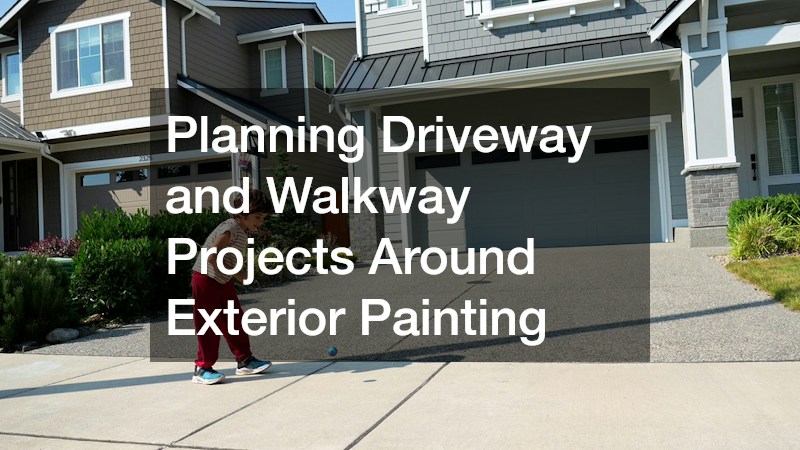
Hardscaping projects like driveways and walkways involve heavy machinery and materials that can easily affect your home’s exterior appearance. If you are planning asphalt paving for your driveway, it generally makes sense to complete that project before painting the front of your house, since paving trucks and equipment need close access to your home. Delivery trucks, rollers, and skid-steers often need to maneuver within a few feet of your siding, trim, and garage door, putting freshly painted surfaces at serious risk of scuffs and scrapes. Dust and tar odors from paving can also drift onto nearby surfaces during the curing process, which typically takes anywhere from 24 to 72 hours before the surface can handle light foot traffic, and up to a week before it’s fully cured for vehicles. During that window, airborne grit and tar fumes can settle into wet paint or tacky surfaces, leaving a rough, discolored finish that’s difficult to fix without repainting. Walkway work carries similar concerns on a smaller scale. Pouring concrete or laying pavers near your entryway often requires staging materials like sand, gravel, or concrete mix close to the house, and wheelbarrows or mixers can easily bump against freshly painted walls or railings. Finishing the driveway and walkway first means your painters can work without worrying about equipment damage or airborne debris. It also gives you a clean, finished hardscape to paint around, so you won’t need to mask off new concrete or asphalt to protect it from drips and overspray.
Creating a Realistic Project Timeline for Multiple Renovations
Juggling several home improvement projects at once requires a clear, realistic schedule that accounts for dependencies between tasks. Start by listing every project you plan to tackle, then identify which ones generate dust, water, or heavy equipment traffic that could affect paint. Projects involving structural changes, plumbing, or major outdoor work should typically come before any painting begins. This approach minimizes the risk of costly do-overs.
- List all planned projects and their estimated timelines
- Identify which tasks involve dust, debris, or water exposure
- Schedule messy or disruptive work before painting whenever possible
- Build in buffer time between project completion and paint start dates
- Communicate the full schedule with every contractor involved
Communicating With Contractors to Avoid Scheduling Conflicts
Clear communication between different contractors working on your home can prevent overlapping schedules that lead to damaged work. Share your overall project timeline with every professional involved, including painters, so everyone understands what needs to happen first. Ask each contractor how much cleanup time they typically need after finishing their portion of the work. This kind of coordination reduces the chances of one team undoing another team’s progress.
It also helps to designate a single point of contact, whether that is yourself or a general contractor, who can track progress and adjust timelines as needed. Delays are common in home renovation, so building flexibility into your schedule prevents frustration when one project runs long. Keeping an open line of communication ensures that painting happens at the right moment, not too early and not unnecessarily delayed.
Thinking through the order of your home improvement projects before you start painting can save you significant time, money, and stress. By addressing plumbing, roofing, outdoor construction, and other major repairs first, you give your paint job the best chance to look great and last long. Take a little extra time to map out your renovation timeline before scheduling your painters. That small amount of planning now can prevent a lot of rework later.